

Best Travel Coffee Gear (2026): Espresso, Filter and Instant on the Go

Our picks at a glance
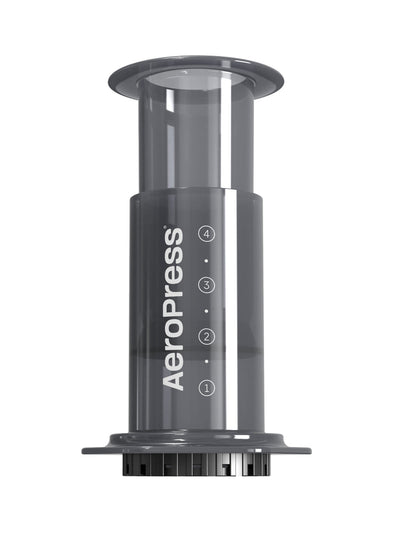

Lightest packable brewer
Hario V60-02 Dripper (Plastic)
Where to buy
$17.00 at Hario Canada
Best value travel espresso
Wacaco Nanopresso
Where to buy
Buy from Eight Ounce CoffeeWhere to buy
$69.90 at Wacaco
Best travel espresso
Wacaco Picopresso
Where to buy
Buy from Eight Ounce CoffeeWhere to buy
$129.90 at Wacaco
Best espresso with no hot water
OutIn Nano
Where to buy
Buy from Cafune BoutiqueWhere to buy
$149.99 at OutIn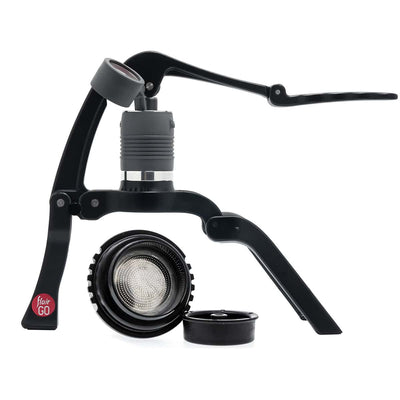

Best grinder for a travel kit
AeroPress Manual Coffee Grinder
Where to buy
Buy from Cupper's Coffee & TeaWhere to buy
$199.95 at AeroPress
Best value travel grinder
Timemore Chestnut C5 PRO
Where to buy
Buy from Eight Ounce CoffeeWhere to buy
$110.00 at Timemore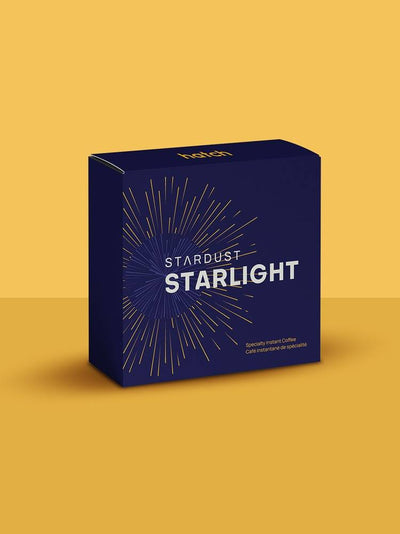
Almost every way of making coffee away from home needs hot water it cannot produce, so start there. A hotel kettle points you one way, a camp stove another, and a machine with its own battery a third. The brewer is usually the cheapest part of the kit. This guide covers filter coffee, espresso, and instant coffee good enough to drink black.
Quick picks:
- Best all-round travel brewer: AeroPress ($54.95). Light, hard to break, cleans up in one push.
- Lightest packable brewer: Hario V60-02 plastic dripper (~$17). Weighs almost nothing and sits inside a mug.
- Best value travel espresso: Wacaco Nanopresso (~$93). Hand-pumped, 336 g, needs no power.
- Best travel espresso: Wacaco Picopresso (~$170). Takes 18 g of coffee, the same as a home machine.
- Best espresso with no hot water: OutIn Nano (~$205). Heats its own water on a battery.
- Best lever espresso for travel: Flair 2GO ($209). A gauge shows the pressure as you pull the shot.
- Best grinder for a travel kit: AeroPress Manual Coffee Grinder (~$260). Packs inside the AeroPress.
- Best value travel grinder: Timemore Chestnut C5 PRO (~$149). Bigger burrs, finer dial, less money.
- Best when nothing fits in the bag: Stardust instant ($15). Freeze-dried specialty coffee, add water.
| Gear | Price (CAD) | How it brews | What you need | Best for |
| AeroPress | $54.95 | Press through a paper filter | Hot water | One good cup anywhere |
| Hario V60-02 (plastic) | ~$17 | Pour over by hand | Hot water, a slow pour | The lightest kit |
| Wacaco Nanopresso | ~$93 | Hand pump, 18 bar | Hot water, fine grind | Value espresso |
| Wacaco Picopresso | ~$170 | Hand pump, 18 bar | Hot water, very fine grind | Espresso quality |
| OutIn Nano | ~$205 | Battery pump, 20 bar | A charge and cold water | Rooms with no kettle |
| Flair 2GO | $209 | Hand lever, 6 to 9 bar | Hot water, very fine grind | Controlling the shot |
| AeroPress Manual Coffee Grinder | ~$260 | Hand grinder | Nothing | Packing inside the brewer |
| Timemore Chestnut C5 PRO | ~$149 | Hand grinder | Nothing | Grind quality per dollar |
| Stardust instant | $15 | Dissolve in water | Hot water | No gear at all |
Prices and specs current as of September 2026.
Sort out the hot water first
Every pick below except the OutIn Nano needs hot water from somewhere else. The trip decides the gear before your taste in coffee does.
Most hotel rooms, rentals and offices have a kettle. If yours does, pack a brewer and skip the rest of this section.
A campsite needs a stove. The Jetboil Flash 1.0L is the compact version, at $179.99 from MEC. The burner and cup together weigh 371 g, and a 100 g fuel canister stores inside the cup.
Some places have neither, like a car, a job site, or a bare hotel room. The OutIn Nano is the only pick here that heats its own water.
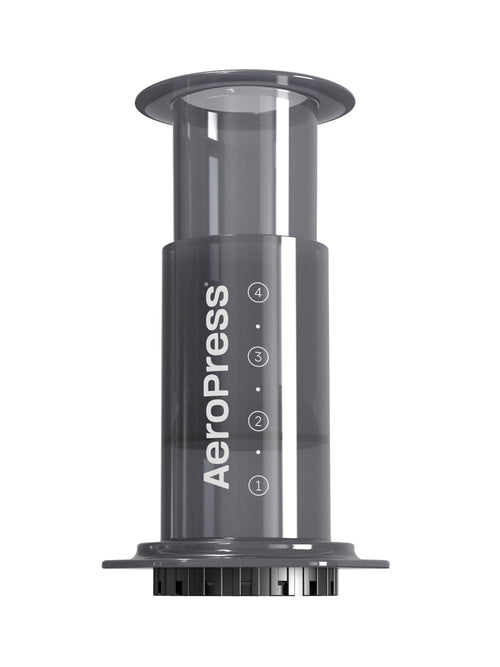
Best all-round travel brewer: AeroPress
The AeroPress is a plastic tube with a plunger. You add coffee and water, wait about a minute, then press the water down through a paper filter. That pressure is what makes the AeroPress forgiving. The coffee still tastes good when the grind is a little off and the water has cooled below ideal. Away from home, both of those things happen.
It weighs 220 g and it is plastic, so it survives being packed badly. Cleaning up is one push of the used grounds into a bin.
AeroPress also make a hand grinder built to slide inside the tube, handle and all, so the brewer and the grinder pack as a single object. That grinder is further down this list.
One cup at a time is the limit. The AeroPress brews up to 10 oz, so two people brew twice. The AeroPress XL doubles that at $99.95 and still packs.
Lightest packable brewer: Hario V60-02 plastic dripper
The V60 is a plastic cone that sits on top of a mug. You put a paper filter inside, add ground coffee, and pour hot water over it slowly.
The cone costs about $17 and weighs almost nothing. Plastic warms up faster than the ceramic version and does not crack when a bag gets dropped. The cone travels sitting inside a mug, so pack the mug and the cone together and the pair takes up almost no room.
What the V60 asks for in return is a slow, steady pour, which makes it the pick if you already brew this way at home. Keep the paper filters flat, in a tin or inside the cone itself. A crushed filter does not sit properly against the sides, and the water runs down the gap instead of through the coffee.
Best value travel espresso: Wacaco Nanopresso
Espresso is coffee forced through very finely ground beans under pressure. The Nanopresso creates that pressure with a hand pump: add hot water and ground coffee, then push the pump twenty or thirty times.
It reaches 18 bar, about twice the 9 bar a cafe machine uses, and produces a small shot topped with crema, the tan foam you see on a good espresso. The whole thing weighs 336 g and needs no power at all.
The standard basket holds 8 g of coffee, so the result is a short, concentrated shot rather than a full double. Wacaco sell a Barista Kit that takes it to 16 g. At about $93 the Nanopresso is the cheapest way in this guide to get espresso rather than very strong filter coffee.
Best travel espresso: Wacaco Picopresso
The Picopresso holds 18 g of coffee in a basket 52 mm across, the same amount a home espresso machine takes. The bottom of the basket is open rather than closed, so you can watch the coffee come out and see whether it is running evenly. Packing the grounds works the same way it does at home, and the shot tastes like it.
It comes with a tamper for pressing the grounds flat, a tool for levelling them first, and a case. At 350 g and 106 x 78 x 71 mm the Picopresso sits in one hand.
Reviewers who rate it highly also call it fiddly. The coffee has to be ground very fine, and you need a grinder that adjusts precisely enough to get there. How evenly you work the pump changes the shot. Buy the Picopresso if you already make espresso at home and do not want to stop for two weeks.
Best espresso with no hot water: OutIn Nano
The OutIn Nano is the only pick here that makes its own hot water. Pour cold water in and the battery heats it in about 200 seconds, a little over three minutes. The pump then pushes that water through the coffee at 20 bar. The machine takes loose ground coffee or a Nespresso Original capsule.
Heating the water uses most of the battery. Starting from cold you get three to five shots per charge. Fill it with water that is already hot and you get more than 200. Owners also report that the machine will not brew while it is plugged in and charging, so charge it overnight.
Buy the OutIn Nano for a car, a campsite with no stove, or a hotel room with no kettle.
Best lever espresso for travel: Flair 2GO
The Flair 2GO is a lever machine. You pour hot water into a cylinder, add the coffee underneath, and pull a handle down to push the water through. A gauge on top shows the pressure while you pull, so you can ease off or push harder as the shot runs. None of the pump-driven makers above show you that.
The Flair takes 12 to 18 g of coffee and runs at 6 to 9 bar, the pressure a cafe machine uses. The frame folds into a case measuring 253 x 135 x 104 mm and needs no electricity.
At 1.67 kg in the case it is the heaviest thing in this guide, which is what the lever mechanism costs you.
Temperature is the known catch with every Flair. The 2GO cylinder has thin walls and is built to work without preheating, but owners repeatedly report sour shots when they skip a hot rinse, especially with lighter roasts. Sour is what coffee tastes like when the water was too cool to pull the sweetness out. Rinse the cylinder and the basket with hot water before you pull, and the problem goes away.
Best grinder for a travel kit: AeroPress Manual Coffee Grinder
The best idea in travel coffee this year is about packing rather than grinding. AeroPress made the body slim, and the crank handle detaches magnetically, so the whole grinder slides inside an AeroPress tube. It fits the Original, Clear, XL, Go, Go Plus and Steel. Brewer and grinder stop being two things to find room for.
The grinder is good on its own merits. The burrs, meaning the two metal cones that crush the beans between them, are made in Italy and coated in titanium to slow down wear. There are more than 60 settings, from fine enough for espresso to coarse enough for a French press, and the grinder holds 25 g of beans. AeroPress warranty the burrs for life and everything else for a year.
The price is the catch. At around $260 the grinder costs nearly five times the brewer it hides inside. It also does not fit the AeroPress Premium.
Best value travel grinder: Timemore Chestnut C5 PRO
Timemore replaced the older C3 line with the C5. The burrs, the cones that do the cutting, went from 38 mm across to 42 mm, which grinds faster and turns out more evenly sized grounds. The dial went from 48 clicks of 0.0833 mm to 48 clicks of 0.031 mm. Each click now changes the grind by less than half as much, so you can fine-tune it far more precisely.
That precision matters more on a trip than at home. Different water and different amounts of coffee push you to re-adjust, and a finer dial lets you.
The body is a single piece of metal and the handle folds flat. Two bearings hold the central shaft straight, which keeps the burrs lined up and the grounds evenly sized.
Weight is the cost. At 640 g the C5 PRO is heavier than most of the brewers it feeds, and heavier than the C3 it replaced. If weight is what you are cutting, the older Timemore Chestnut C3S is lighter and costs $120. The C3S has 38 mm burrs, and a dial you reach by taking the cup off the bottom. Neither grinder fits inside an AeroPress.
Best when nothing fits in the bag: Stardust specialty instant
Specialty instant coffee is freeze-dried from the same beans a roaster sells whole, and it has come a long way from what instant used to mean.
Stardust is made by Hatch and comes in single-serve sachets. Add hot water, stir, drink. Stardust works on a plane, at a trailhead, or in a room with a kettle and nothing else.
Grinding fresh still tastes better. Stardust is good enough to drink black without apologising for it, at $15 a box. Rosso's Instant! Daydream is the other one worth packing, in six compostable packets, each one making a 250 ml cup.
How to pick your setup
Start with the hot water, then count what you are willing to carry.
- A room with a kettle, and space in the bag: an AeroPress with the AeroPress grinder inside it. About $315 for the pair, and one object to pack.
- A room with a kettle, and a full bag: the V60 at $17, or instant at $15 if even the mug is borrowed.
- A car or a campsite with no stove: the OutIn Nano, because nothing else here makes hot water.
- Espresso at home, and a trip longer than a few days: the Picopresso and a hand grinder, about 500 g between them.
Related reading
- AeroPress: not just for coffee nerds, on getting more out of the brewer above
- Best manual coffee grinder in Canada, if the grinder is the part you want to get right
- How to make espresso at home, for the grinding and packing the portable makers assume you know
- Pour over curious? Start here, for pouring technique on the V60
- How to store coffee beans, which matters more when the beans live in a bag for a week
Frequently asked questions
What is the best coffee maker for travelling?
For filter coffee, the AeroPress at $54.95. It weighs 220 g, brews in about two minutes, forgives a rough grind and cool water, and does not break. For espresso, the Wacaco Picopresso at around $170 takes 18 g of coffee, the same as a home machine. Both need hot water from somewhere else.
How do you get hot water for coffee while travelling?
Three ways, in rough order of how often they apply. A kettle in the room covers most hotels, rentals and offices. A canister stove covers a campsite, and the Jetboil Flash is $179.99 and weighs 371 g with the burner. A machine that heats its own water covers everything else, and among portables that means the OutIn Nano. Work out which one applies before you choose a brewer.
Can you make real espresso while travelling?
Yes. The Wacaco Nanopresso and Picopresso both reach 18 bar from a hand pump. The OutIn Nano runs at 20 bar on a battery. The Flair 2GO is a lever that pulls 6 to 9 bar, the same as a cafe machine, with a gauge to read as you go. All four need coffee ground fine enough for espresso, which is the part most people underestimate on the road.
Which hand grinder fits inside an AeroPress?
The AeroPress Manual Coffee Grinder, which was designed for it. The body is slim and the crank comes off magnetically, so the grinder packs inside the tube of the Original, Clear, XL, Go, Go Plus or Steel. It costs around $260. Hand grinders from other brands, the Timemore Chestnut line included, ride in the bag separately.
Should you bring a grinder or pre-ground coffee?
For a weekend, grind at home the morning you leave and keep the coffee in a sealed bag. For anything longer, or for espresso, bring a hand grinder. Ground coffee loses its aroma within a day or two, and espresso needs a grind you can adjust on the spot.
Is instant coffee good enough for a trip?
Specialty instant is. Roasters like Hatch and Rosso freeze-dry the same coffee they sell as whole beans, and a box costs $15 to $21. It is worth drinking black. Supermarket instant is a different product made from different coffee.
Want great coffee to match your great gear?
Whatever you pack, it is only as good as the beans that go in it. Stillwater Coffee Club ships freshly roasted whole bean coffee from Canada's best independent roasters every month, matched to your taste.
Try the best coffee subscription in Canada.
Stillwater Coffee Club ships freshly-roasted whole bean coffee from Canada's best independent roasters every month. Plans start at $45.60/month, ships free, cancel any time. Learn more about our coffee subscription →
The picks in full
Best all-round travel brewer
AeroPress
What's good
- Brews and cleans in about two minutes
- Forgiving about grind size and water temperature
- 220 g of plastic, with very little to break
What to know
- Brews 10 oz, enough for one cup
- Needs paper filters to keep on hand
Lightest packable brewer
Hario V60-02 Dripper (Plastic)
What's good
- About $17, the cheapest way into pour-over
- Warms up faster than ceramic or glass
- Plastic body will not chip or crack
What to know
- Needs a slow, steady pour to taste right
- Brews into whatever it sits on, so you supply the vessel
Where to buy
$17.00 at Hario CanadaBest value travel espresso
Wacaco Nanopresso
What's good
- 18 bar from a hand pump, no power needed
- 336 g, with the cup built in
- Cheapest route to genuine espresso
What to know
- The 8 g basket makes a short shot, not a double
- You supply the hot water
Where to buy
Buy from Eight Ounce CoffeeWhere to buy
$69.90 at WacacoBest travel espresso
Wacaco Picopresso
What's good
- Takes a full 18 g, the same as a home machine
- Open-bottomed basket lets you watch the shot
- Tamper, levelling tool and case included
What to know
- Needs a grinder that goes very fine and adjusts precisely
- How evenly you pump changes the shot
Where to buy
Buy from Eight Ounce CoffeeWhere to buy
$129.90 at WacacoBest espresso with no hot water
OutIn Nano
What's good
- Heats its own water in about three minutes
- Takes loose grounds or Nespresso capsules
- Charges by USB-C or from a car socket
What to know
- Three to five shots per charge when heating from cold
- Will not brew while it is charging
Where to buy
Buy from Cafune BoutiqueWhere to buy
$149.99 at OutIn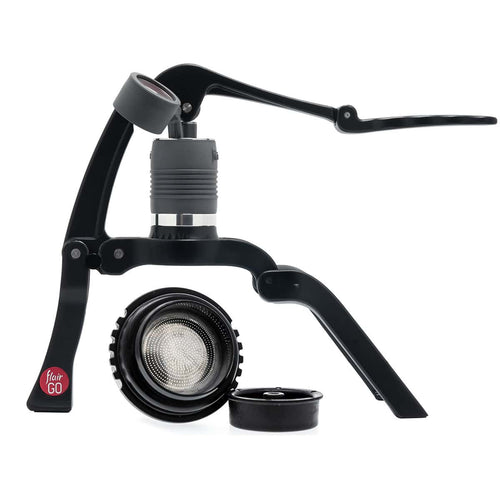
Best lever espresso for travel
Flair 2GO
What's good
- The gauge lets you shape the shot as it runs
- Takes 12 to 18 g, a full cafe dose
- Folds into its case and needs no power
What to know
- 1.67 kg in the case
- Tastes sour unless you rinse it with hot water first
Best grinder for a travel kit
AeroPress Manual Coffee Grinder
What's good
- Packs inside the AeroPress tube, crank included
- More than 60 settings, espresso to French press
- Burrs warrantied for life
What to know
- About $260, dear for a hand grinder
- Does not fit the AeroPress Premium
Where to buy
Buy from Cupper's Coffee & TeaWhere to buy
$199.95 at AeroPressBest value travel grinder
Timemore Chestnut C5 PRO
What's good
- 42 mm burrs, up from 38 mm on the C3
- 48 clicks of 0.031 mm, for fine tuning
- One-piece metal body with a folding handle
What to know
- 640 g, heavier than the C3 it replaced
- Holds 30 g, so a large carafe takes two goes
Where to buy
Buy from Eight Ounce CoffeeWhere to buy
$110.00 at Timemore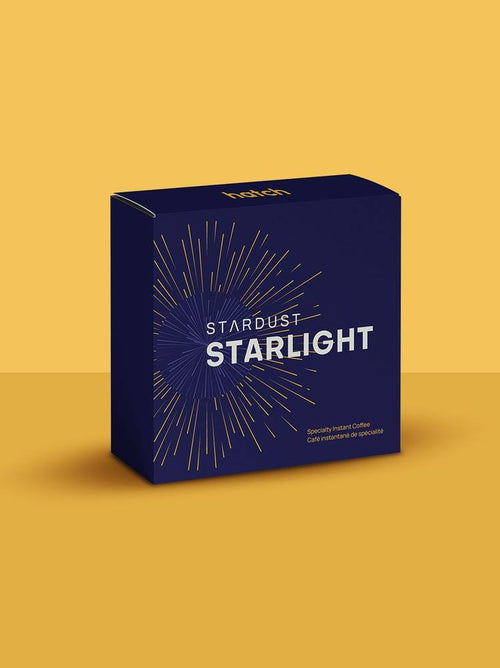
Best when nothing fits in the bag
Stardust Specialty Instant (Starlight)
What's good
- Single-serve sachets, no equipment needed
- Freeze-dried from specialty coffee, not commodity beans
- Keeps for months and cannot break
What to know
- Grinding fresh still tastes better
- One strength per sachet, nothing to adjust