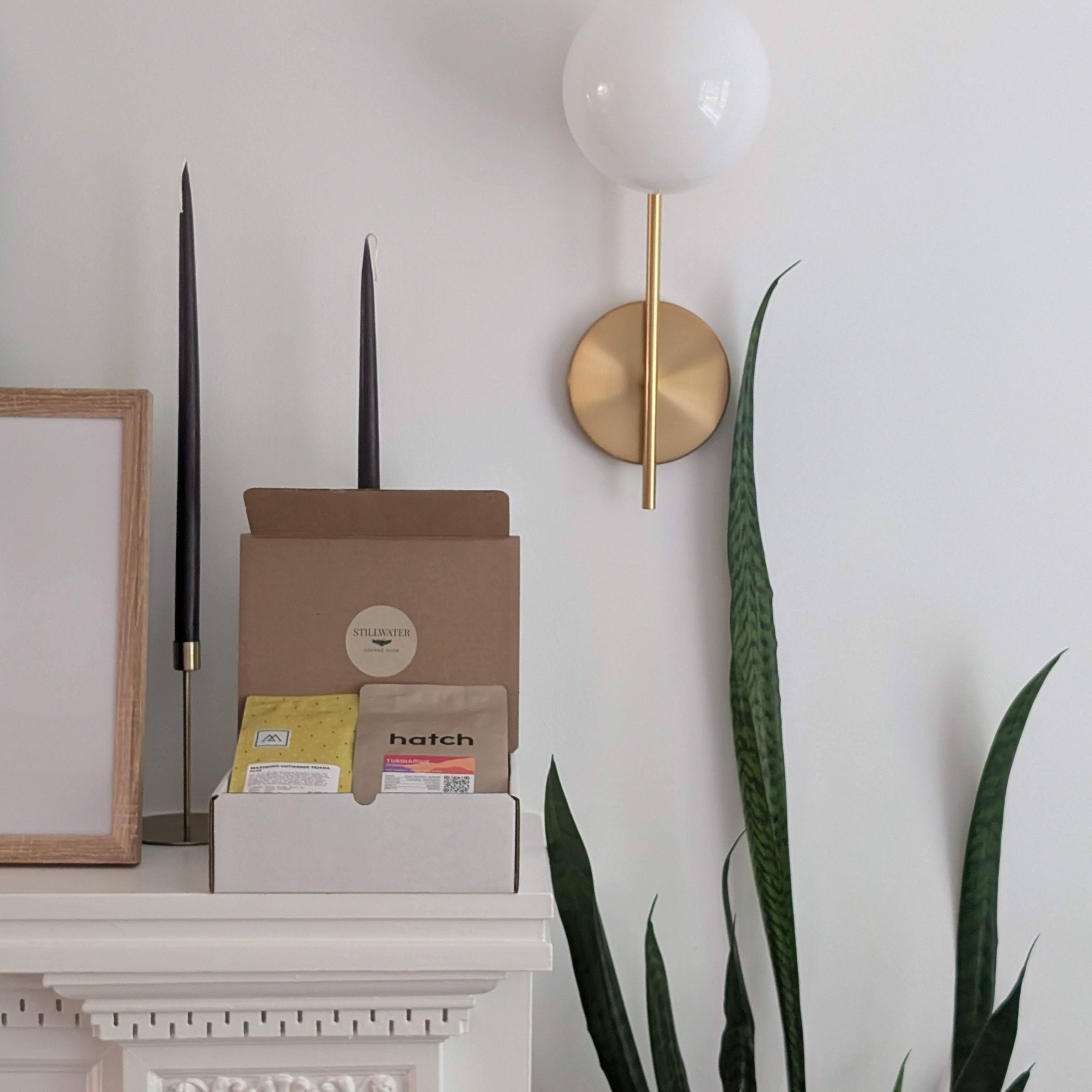
I work from home and have three young kids. My mornings are usually full with getting backpacks ready and checking emails. Like a lot of people, coffee is how I start my day. Eventually, morning (and late morning) coffee became a bit of a "sacred" yet simple ritual: a quiet moment with a coffee I actually looked forward to drinking. Over time, I got more serious about it: trying out new roasters, sampling better beans, and just trying to get better at making consistently great coffee.
“How do I make coffee like this?”
My friends would visit, and I loved sharing my favourite coffees with them. I kept hearing the same things:
“Where did you get this coffee?”
“Why is your coffee so much better than mine?”
“How do I make coffee taste like this?”
Really, there was no secret to how I made my coffee - I just started with really great beans. I'd send them home with a bag of my favourite beans, or point them to a roaster I loved.
Specialty coffee has been intimidating... until now.
Despite wanting badly to upgrade their coffee routine, my friends kept buying the same stale grocery store for their daily coffee. Not because they didn’t care about drinking great coffee, but because getting into good coffee was confusing and felt like a lot of work. They didn't want to invest time and energy in making great coffee, but most of what they read on the internet (ratios, scales, pour techniques, recipes) made specialty coffee feel intimidating and time-intensive.
That’s what led me to start the Stillwater Coffee Club. I wanted to make it easy for people to experience truly great coffee, without needing to obsess over every detail. Just fresh, thoughtfully chosen beans, delivered to your door. The kind of coffee that just makes your morning better.
- Dean, Director of Coffee
at the Stillwater Coffee Club
Coffee Is Meant to Be Enjoyed
Specialty coffee has come a long way, and most of that progress is worth celebrating. We've built direct trade relationships that connect roasters directly with farmers, cutting out exploitative middlemen and ensuring producers receive fair compensation for their work. We've created transparency around sourcing—you can trace beans back to specific farms, cooperatives, even individual lots. The environmental practices have improved dramatically: shade-grown coffee that preserves ecosystems, water-conscious processing methods, compostable packaging, carbon-neutral shipping. We've learned to roast lighter, revealing the distinct characteristics of different origins instead of burning everything into uniform bitterness. The craft and care that goes into specialty coffee today is remarkable, and the results speak for themselves—the coffee is genuinely better, and it's getting to us in ways that are more sustainable and equitable for everyone involved.
However: in making coffee better, we've also made it more complicated.
There's real depth to explore if you want it. Gooseneck kettles, gram-accurate scales, burr grinders with infinite adjustments, temperature-controlled brewers. Rinsing filter papers, timing blooms, following recipes that specify pour rates and agitation patterns. The people who got into these details are the reason specialty coffee exists—they proved that small changes in process create meaningful differences in the cup, and their passion built an entire industry around quality and craft.
The unintended consequence is that making good coffee at home now looks like it requires expertise and equipment. Someone drinking grocery store coffee in a drip machine sees all of this and reasonably concludes that specialty coffee isn't for them. Not because they don't want better coffee, but because the gap between what they have and what they think they need feels insurmountable.
We've also lost something more fundamental in the process. Coffee used to be a batch activity, something you made for the table or the office, something that gave you a reason to gather. A pot brewed in the morning that the whole family drank from. Office workers congregating around the coffee machine—not to grab a cup and rush back to their desks, but to actually take a break, to talk, to step away from work for fifteen minutes. We called them coffee breaks because that's what they were: breaks, marked by coffee.
Then came the era of single-serve machines. Keurigs and Nespresso pods designed for efficiency and isolation. One cup at a time, consumed alone, often while still working. We've turned coffee from something that brought people together into fuel we consume at our desks. The ritual has been optimized out of existence.
Specialty coffee can be both excellent and accessible. It doesn't require perfect technique or specialized equipment. It should be approachable enough that anyone can make it, good enough that it's worth sharing, and simple enough that it gives you a reason to stop what you're doing and sit down with someone.
Coffee isn't meant to be optimized. It's meant to be enjoyed, ideally together.