

Fellow Aiden vs Moccamaster: The 2026 Brewer Showdown

Our picks at a glance

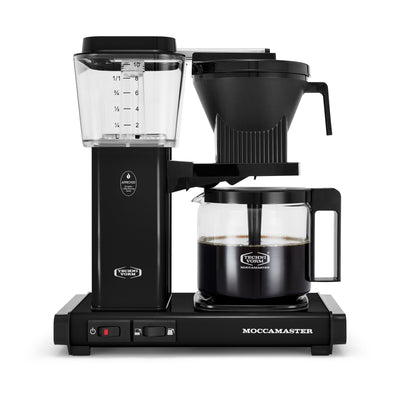
Some links to other retailers earn us a commission. It does not change which machines we pick or what you pay. As an Amazon Associate I earn from qualifying purchases.
You're probably in the same spot a lot of serious home brewers hit after a couple of years of buying better beans. Your grinder is no longer the weak link. You've learned that fresh coffee from Canadian roasters can taste sweet, clean, and layered at home. Now the old drip machine is what's holding the cup back.
Whichever brewer you pick, it is only as good as the beans you put in it. A fresh coffee subscription keeps freshly roasted coffee arriving so you are never brewing stale beans.
That's where the Fellow Aiden vs Moccamaster decision gets interesting. These two brewers sit in the same premium conversation, but they don't solve the same problem in the same way. One leans into precision, programmability, and control. The other leans into stability, simplicity, and a reputation built over decades of actual ownership.
I've spent months brewing on both styles of machine, and the biggest difference for Canadians isn't just what ends up in the mug. It's the full ownership arc. It starts with unboxing and first setup, carries through rushed weekday mornings, and ends years later when you need a part, a repair, or a reason to keep the machine instead of replacing it.
Table of Contents
- The Ultimate Upgrade Decision for Your Morning Coffee
- An Introduction to the Contenders
- Brewing Technology and Temperature Control
- Daily Use and Countertop Experience
- Long-Term Value and Maintenance in Canada
- Who Is Each Brewer For A Canadian Buyer's Guide
- Final Verdict and Stillwater Bean Pairings
The Ultimate Upgrade Decision for Your Morning Coffee
Buying either of these brewers means you've moved past commodity coffee thinking. You're no longer asking, “Will it make coffee?” You're asking whether your morning routine should revolve around control or confidence.

The Moccamaster appeals to people who want the machine to disappear into the ritual. Fill the reservoir, dose the basket, hit the switch, and trust the brewer to do what it has always done well. The Aiden attracts a different buyer. It invites you to shape the brew, chase a sweeter cup from a lighter roast, and treat batch coffee with some of the same attention you'd give a hand pour-over.
That split matters more in Canada than many reviews admit. A premium brewer here isn't just a countertop object. It has to survive dry winter air, hard water in some regions, shipping delays when parts are needed, and the reality that many buyers want one machine to cover both quick weekday brews and slower weekend coffee.
The choice comes down to three real questions
- How much control do you want? If adjusting brew variables sounds fun, the Aiden makes that part of the experience. If it sounds like one more decision before work, the Moccamaster stays appealing.
-
How do you buy coffee?
If you rotate through varied single-origin coffees from Canadian roasters, especially lighter profiles, flexibility matters more. If you mostly drink balanced medium roasts, consistency often wins. - How long do you expect to keep it? Some buyers replace appliances when the next feature set appears. Others want one brewer for years and care significantly about serviceability.
Practical rule: Buy the machine that matches your least patient morning, not your most idealistic Saturday.
I'd also think about what else you brew. A lot of coffee drinkers who get serious about filter coffee also branch into tea or matcha, where water temperature discipline matters for flavour. That's one reason a practical read like this Jade Leaf Matcha review 2026 can be useful. It's a reminder that brewing tools shape taste most when they let you match heat to the drink, not just push hot water through leaves or grounds.
The wrong choice here usually isn't about bad coffee. Both machines can make good coffee. The wrong choice is buying a brewer whose workflow annoys you after the honeymoon phase wears off.
An Introduction to the Contenders
The easiest way to understand Fellow Aiden vs Moccamaster is to stop thinking about them as close twins. They aren't. They occupy the same buying tier, but they reflect two different eras of coffee equipment design.

At a glance comparison
| Feature | Fellow Aiden | Technivorm Moccamaster |
|---|---|---|
| Core identity | Tech-forward precision brewer | Legacy batch brewer |
| User experience | Digital, settings-led | Simple, direct, tactile |
| Temperature approach | User-adjustable with phase control | Fixed brew range |
| Best fit | Coffee drinkers who like tuning recipes | Coffee drinkers who want repeatable daily brewing |
| Ownership feel | Modern appliance | Long-established workhorse |
| Long-term confidence | Promising but newer | Deep reputation for repairability and longevity |
If you want to see the product page for the newer machine, Stillwater lists the Fellow Aiden Precision Coffee Maker.
>Two different coffee philosophies
The Technivorm Moccamaster has the historical advantage in Canada. Technivorm has been producing drip brewers since 1968, many Moccamaster models are marketed with a 5-year warranty in Canada, and the company stresses hand-built manufacturing in the Netherlands along with long-term repairability, as noted in this Canadian Moccamaster discussion. That matters because a long market history creates more than nostalgia. It creates familiar service expectations, a strong used market, and buyer confidence.
The Fellow Aiden arrives from the opposite direction. It's a much newer entrant in premium batch brewing, which makes it a technology-first challenger rather than a legacy machine. Its appeal is obvious the minute you use it. It feels designed by people who want automatic coffee to behave more like a controlled brew platform than a traditional home appliance.
The Moccamaster still feels like the benchmark many Canadians compare everything else against, even when the newer machine can do more.
That's why this comparison can confuse buyers. If you read only spec sheets, the Aiden can look like the clear leap forward. If you talk only to long-time owners, the Moccamaster can sound untouchable. Both views miss something.
The Aiden's value is in capability. The Moccamaster's value is in maturity.
One asks, “What more can batch coffee do?” The other asks, “Why complicate what already works?”
Neither position is wrong. But they lead to very different ownership experiences once the box is open and the machine becomes part of your actual week.
Brewing Technology and Temperature Control
The technical gap can no longer be ignored. The biggest difference in Fellow Aiden vs Moccamaster isn't styling, app logic, or even price sensitivity. It's temperature control.
Where the engineering splits
The Moccamaster usually brews in a fixed range of about 92 to 94°C, while the Aiden allows users to set brewing temperatures from 50°C to 99°C and even program different temperatures for different brewing phases, according to Coffee Chronicler's Fellow Aiden review. In practical terms, that's a control span of roughly 49°C for the Aiden versus a narrow 2°C brewing band for the Moccamaster in that same source.
That's not a minor feature difference. It's a completely different brewing philosophy.
The Moccamaster assumes the brewer should hit a proven extraction zone and repeat it with minimal fuss. For many coffees, especially classic medium roasts, that's a smart assumption. You don't need to manage anything. You just need good beans, the right grind, and a solid ratio.
The Aiden assumes that not every coffee wants the same heat profile. That's more aligned with how many specialty roasters think about extraction now, especially for lighter coffees that can show either clarity or harshness depending on temperature and flow.
For readers who want a broader primer on why heat matters so much in the cup, this guide on optimal water temp for coffee is useful background.
What that means in the cup
If you're brewing washed Ethiopian coffee, a delicate Canadian-roasted Gesha, or any light roast that turns sharp when pushed too hard, the Aiden gives you room to adjust. You can back off heat, alter the brew phases, and work toward a cup that tastes more transparent and less blunt.
If you mostly brew chocolatey, nutty, caramel-driven coffees, the Moccamaster's restraint can be an advantage. It doesn't tempt you into overthinking. It gives you the kind of balanced, familiar batch brew that works with breakfast, half-awake mornings, and repeat purchases of the same roast.
Here's the catch. More control doesn't automatically mean better coffee.
It means more responsibility. If your grinder is inconsistent, your recipe is sloppy, or your beans are ageing out, the extra temperature range won't rescue the cup. It will only reveal more clearly where the weak link is.
Brewing advice: The Aiden rewards intentional users. The Moccamaster rewards disciplined habits.
For buyers leaning toward simplicity, the Technivorm Moccamaster KBT remains attractive because its core promise is narrow and honest. It doesn't ask to become your hobby. It just asks for decent coffee and a little routine.
That's why I don't frame this section as old versus new. I frame it as fixed excellence versus flexible precision. You need to decide which one matches how you brew at home.
Daily Use and Countertop Experience
Specs matter on shopping day. Workflow matters every morning after that.

What weekday mornings feel like
The Moccamaster feels immediate. Its controls are plain, the interactions are obvious, and there's very little mental load. On a cold Stillwater morning when you haven't fully woken up, that simplicity feels generous. You fill, dose, switch on, and move on.
The Aiden feels more like using a modern kitchen device built for people who enjoy settings, screens, and guided options. That can feel polished and satisfying. It can also feel like one layer of attention more than some people want before caffeine.
Neither approach is better in isolation. The question is what kind of friction you tolerate. Some brewers want the machine to ask for input because that input improves the result. Others want the machine to accept a routine and stay out of the way.
A useful companion read on this idea is Stillwater's roundup of electric coffee makers that taste like pour-over, because it gets at the same tension between convenience and hands-on flavour shaping.
Cleaning, filling, and living with them
The Moccamaster's design language is older, but it wears well in daily use. Its parts feel approachable. Nothing about it suggests hidden complexity. If you clean as you go, it becomes one of those machines that settles into the kitchen without demanding much emotional bandwidth.
The Aiden feels more integrated and more appliance-like. Some people will prefer that cleaner, more monolithic presence on the counter. Others will find that it lacks the cheerful, almost workshop-like charm of a Moccamaster.
From repeated home use, the practical trade-offs look like this:
- If you value speed of comprehension, the Moccamaster wins. Anyone in the house can figure it out quickly.
- If you value recipe memory and precision, the Aiden is easier to make your own.
- If your kitchen is part design statement, this becomes personal fast. The Moccamaster is iconic and visible. The Aiden is quieter and more contemporary.
- If multiple people use the brewer, simplicity usually reduces friction.
A premium brewer should make the first cup easier, not turn every morning into a calibration session.
That's why countertop experience matters. Coffee gear enthusiasts often underrate the emotional side of ownership. You don't just buy flavour. You buy a daily interaction. If the machine suits your pace, you'll enjoy it for years. If it irritates you, no feature list will save it.
Long-Term Value and Maintenance in Canada
Canadian buyers should exercise caution. A premium brewer isn't just a taste upgrade. It's a repair decision, a parts decision, and sometimes a patience decision.
What Canadian ownership really asks
Most comparisons stop at “Moccamaster is more durable” and leave it there. That isn't enough. The more useful question is what happens after the easy years.
A useful point raised in Coffee Friend's Fellow Aiden vs Moccamaster comparison is that the Moccamaster's simple mechanical design and widely available replacement parts are frequently cited strengths, while the Aiden's more electronics-heavy platform raises a different issue for Canadian buyers. What does service look like after warranty, and what does it cost in time and hassle to keep the brewer running? That's the fundamental ownership question for anyone hoping a machine lasts 7 to 10 years or more.
That line of thinking matches what many Canadian households run into with small appliances more broadly. Repair isn't always the easiest path. Parts availability, shipping, and turnaround can matter as much as build quality.
Which machine ages better
The Moccamaster has a natural advantage because its design is easier to understand and easier to support. When people say it feels like a machine meant to be kept, they usually mean exactly that. It has a long-standing reputation for being the kind of brewer owners maintain instead of discard.
The Aiden may prove durable in long ownership. It's too early for it to have the same depth of reputation in Canadian homes. That doesn't make it fragile. It makes it less established.
If long-term ownership is your main filter, think in terms of risk tolerance:
-
Low-risk buyer
You want a machine with an established service story, familiar parts logic, and years of owner experience behind it. The Moccamaster fits more naturally. -
Feature-first buyer
You accept that newer electronics-heavy products can bring some long-run uncertainty because the day-to-day experience is better aligned with how you brew now. -
Household utility buyer
You want one brewer that several people can use and that won't become a support project later. Simpler machines usually age more gracefully in shared homes.
The longer you plan to keep a brewer, the more repairability matters relative to features you may stop using.
That's the part many buyers regret noticing too late. Advanced controls feel exciting on day one. Parts access feels exciting only when you suddenly need it. But that's often when the purchase reveals its real value.
Who Is Each Brewer For A Canadian Buyer's Guide
The best answer in Fellow Aiden vs Moccamaster depends on your habits, not on abstract rankings.

The set-and-forget buyer: Technivorm Moccamaster
This person buys excellent beans, owns a capable grinder, and wants the machine to do its job without opening a decision tree. They care about repeatability more than experimentation.
The Moccamaster is the better fit. It suits people who already know their preferred roast profile and don't need the brewer to become a second hobby. If your happiest coffee moment is a dependable mug before work, this is your lane.
The precision enthusiast: Fellow Aiden
This buyer changes coffees often, notices small shifts in extraction, and enjoys adjusting variables to find the sweet spot for each bag. They don't resent complexity if it produces a better cup.
The Aiden fits that person better. It turns batch b
rewing into a more expressive tool. If you're the type who brews one roast for weekday volume and another for weekend curiosity, the added control has real value.The practical Canadian household
This is the category I think most buyers belong to. Two people may use the machine. One wants convenience. The other wants quality. The brewer has to survive busy mornings, guests, and periods where nobody wants to fiddle.
In that scenario, the decision often comes down to who will compromise more easily. If the tinkerer can simplify their expectations, the Moccamaster is easier for the whole house. If the household already embraces app-based kitchen gear and likes presets, the Aiden can work beautifully.
I often compare this kind of purchase to buying any serious countertop tool. The “best” model on paper isn't always the best one to live with. That's why even outside coffee, a practical buyer's resource like this food processor guide for Kiwi kitchens is useful in spirit. Good equipment choices usually come down to use patterns, cleanup tolerance, and how many people need to understand the controls.
Here's the short version:
- Choose Moccamaster if reliability, simple operation, and long ownership confidence matter most.
- Choose Aiden if recipe control and brew customisation matter enough that you will use them.
- Choose based on your household, not just your inner coffee nerd.
Final Verdict and Stillwater Bean Pairings
My verdict after long use
If you forced me to choose one brewer for the widest range of Canadian buyers, I'd give the nod to the Moccamaster. Not because it's more advanced. It isn't. I'd choose it because it's easier to recommend without caveats. It delivers a dependable daily experience, asks very little from the user, and carries the kind of ownership reputation that matters once the excitement of a new machine fades.
But that's not the same as saying it's the more impressive brewer.
The Fellow Aiden is the more ambitious machine. For the right user, it can be the more satisfying one too. If you buy carefully roasted coffee with distinct flavour structure and you like adjusting brew variables, the Aiden gives you room the Moccamaster doesn't.
So my practical verdict is straightforward:
- Buy the Moccamaster if you want a premium brewer that stays easy.
- Buy the Aiden if you want a premium brewer that stays interesting.
Bean styles that suit each brewer
The Moccamaster tends to shine with coffees that already present as balanced and complete. Think classic Canadian-roasted medium profiles with chocolate, nuts, caramel, gentle fruit, or comforting sweetness. The machine's consistency flatters coffees that don't need coaxing. It's excellent for blends and approachable single origins that you'll want to brew repeatedly with minimal adjustment.
The Aiden is the better stage for coffees that are more particular. Light roasts, floral lots, tea-like washed coffees, and profiles with bright acidity benefit most when the brewer gives you room to tune extraction. If a coffee tastes a little tight, sharp, or muted in a fixed system, the Aiden gives you a better chance to find its best expression.
My pairing advice for Canadian buyers is simple:
- For the Moccamaster, look for dependable medium roasts from Canadian specialty roasters that prioritise sweetness and structure.
- For the Aiden, lean toward lighter and more nuanced coffees where temperature and phase control can shape the final cup.
- For either machine, buy fresher coffee than you think you need. These brewers expose stale beans quickly.
The right machine doesn't finish the job. It just gives good coffee a fair chance.
Buying one of these as a gift? See who each one suits in our Father's Day coffee gift guide.
If you want better beans to match whichever brewer you choose, Stillwater Coffee Club makes it easy to discover fresh coffees from top Canadian roasters based on your taste and brew style. It's a smart way to keep a new machine fed with coffee that brings out its full potential.
Frequently asked questions
Should I buy the Fellow Aiden or the Technivorm Moccamaster?
It comes down to how you brew. The Moccamaster suits the set-and-forget buyer who wants a dependable mug before work and the same roast on repeat. The Aiden suits the precision enthusiast who rotates coffees and likes adjusting variables to find each bag's sweet spot. For the widest range of Canadian buyers, the Moccamaster is the easier machine to recommend without caveats. If recipe control matters enough that you'll actually use it, the Aiden gives you room the Moccamaster doesn't.
What is the temperature difference between the Aiden and the Moccamaster?
The Moccamaster brews in a fixed range of about 92 to 94°C, a narrow 2°C band. The Aiden lets you set brewing temperatures from 50°C to 99°C, a span of roughly 49°C, and you can program different temperatures for different phases of the brew. The Moccamaster's restraint suits classic medium roasts that want a proven extraction zone. The Aiden's range gives you room to back off heat for light roasts and delicate lots that can turn sharp when pushed too hard.
Which brewer is easier to keep running long term in Canada?
The Moccamaster has the edge here. Technivorm has built drip brewers since 1968, the machines are hand-built in the Netherlands, and many Moccamaster models carry a 5-year warranty in Canada. Its simple mechanical design and widely available replacement parts are frequently cited strengths. The Aiden runs on a more electronics-heavy platform, which raises the open question of what service looks like after warranty. If you plan to keep a brewer 7 to 10 years or more, that repairability gap matters.
Does the Aiden's extra control actually make better coffee?
More control means more responsibility, not an automatic upgrade in the cup. If your grinder is inconsistent, your recipe is sloppy, or your beans are ageing out, the extra temperature range won't rescue the brew. It will only show the weak link more clearly. The Aiden rewards intentional users who dial in their variables. The Moccamaster rewards disciplined habits and good beans at the right grind and ratio.
Which brewer is better for a household where several people use it?
The Moccamaster usually reduces friction in a shared kitchen. Its controls are plain and anyone in the house can figure it out quickly, which suits busy mornings and guests. The Aiden leans on screens, settings, and guided options, so it fits households that already embrace app-based kitchen gear and like presets. If your kitchen has one person who wants convenience and another who wants quality, the Moccamaster is easier for the whole house unless everyone enjoys the extra step.
Related guides
Compare every pick
| Model | Price | Temperature | Capacity | Warranty |
|---|---|---|---|---|
| Fellow Aiden | $525.00 $399.95 | Set to the degree | 1.5 L, or a single cup | 2 years |
| Technivorm Moccamaster | $490.00 $369.00 | Fixed, 92 to 96 degrees | 1.25 L, half or full | 5 years |
The picks in full
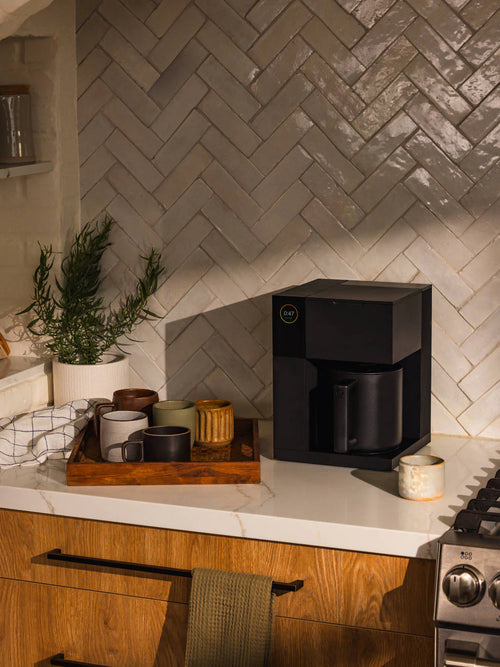
Best for control
Fellow Aiden
What's good
- Set the brew temperature to the degree
- Brews a single cup or a full 1.5 L carafe
- Schedule tomorrow's brew from your phone
What to know
- Two-year warranty, extendable at extra cost
- Settings and an app to learn before the first brew
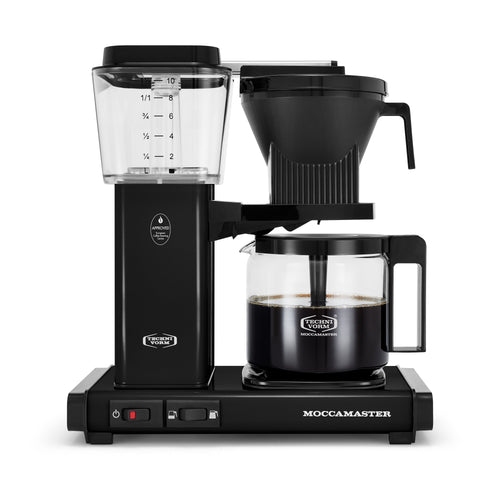
Best for repeatable daily brewing
Technivorm Moccamaster
What's good
- Holds 92 to 96 degrees for the whole brew
- One switch for a half carafe or a full one
- Five-year warranty, with parts sold for every model
What to know
- No temperature or recipe adjustment
- Brews into the carafe only, with no single-cup basket