

Best Home Espresso Machine Canada 2026: A Guide

Our picks at a glance

Best compact semi-automatic
Breville Bambino Plus
Where to buy
Buy from AmazonWhere to buy
Buy from Amazon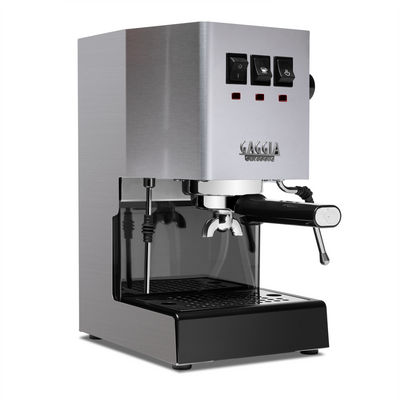
Some links to other retailers earn us a commission. It does not change which machines we pick or what you pay. As an Amazon Associate I earn from qualifying purchases.
You’re probably in the same spot most first serious buyers hit. You want café-quality espresso at home, you’ve opened six tabs, every review seems to recommend something different, and half the advice assumes you already know whether you need a dual boiler, PID, rotary pump, or flow control.
Dialing in espresso is far easier with fresh, consistent beans, which is what a coffee subscription from a rotating lineup of Canadian roasters delivers.
That confusion gets worse in Canada. A machine that looks like a bargain in a US review can become a very different purchase once you factor in Canadian pricing, retailer support, warranty reality, and whether anyone here can service it. Add in counter space, milk drinks, grinder costs, and the kind of beans you enjoy, and “best home espresso machine” stops being a simple question.
The good news is that there is a right answer for your kitchen, your routine, and your budget. It just won’t be the same answer for everyone. A compact semi-automatic can be perfect for one household, while a one-touch super-automatic or a prosumer machine makes more sense for another.
If you’re building a smaller kitchen coffee corner, this guide to a small-space espresso setup is also worth a look.
Table of Contents
- Your Path to Perfect Home Espresso Starts Here
-
Top Home Espresso Machines for Every Canadian Brewer in 2026
- Your Final Espresso Machine Buying Checklist
Your Path to Perfect Home Espresso Starts Here
Not sure which machine is right for you?
TAKE THE QUIZA lot of people start with the same goal. They’ve had one too many average takeout cappuccinos, they know good coffee exists, and they want that same sweetness and texture at home without turning every morning into a project.
Then the search begins. One review says a beginner should buy a simple machine and learn properly. Another pushes an all-in-one model. A forum thread tells you anything short of prosumer gear is a waste of time. None of that helps when you’re standing in your kitchen asking a more practical question. What machine will make coffee you enjoy, fit your space, and still feel like a good buy in Canada?
The answer starts with honesty about how you drink coffee. If you make one flat white before work, your needs are different from someone who pulls espresso shots for fun on a Sunday afternoon. If you live in a condo, noise and footprint matter. If you mainly drink milk drinks, steam performance matters more than the spec sheet makes it sound.
The best home espresso machine isn’t the one with the most features. It’s the one you’ll use happily every day.
That’s how I’d approach this purchase for a friend. Start with the machine type. Then narrow by routine, Canadian pricing, serviceability, and what kind of coffee you like to drink.
Decoding the Five Types of Home Espresso Machines
The easiest way to avoid buyer’s remorse is to stop comparing every machine against every other machine. First decide which category fits your routine. Then compare within that lane.

Espresso Machine Types at a Glance
| Machine Type | Level of Control | Typical Price (CAD) | Best For |
|---|---|---|---|
| Manual | High | Varies widely | Hobbyists who want hands-on control |
| Semi-Automatic | Medium to high | Varies widely | Most home users who want real espresso without full complexity |
| Super-Automatic | Low | Varies widely | Busy households that want one-touch drinks |
| Prosumer | Very high | Mid to high and above | Enthusiasts chasing café-level results |
| Pod | Very low | Lower entry cost | Simplicity, speed, minimal mess |
Manual machines
Manual machines reward patience. You control the workflow and you feel every part of it, from prep to extraction. That appeals to people who enjoy craft and don’t mind a learning curve.
The upside is control. The downside is that every weak point in your setup shows up in the cup. If your grinder isn’t good enough, a manual machine won’t hide it. If you don’t want to weigh, tamp, and practise, this category can become frustrating fast.
A manual machine makes sense if you want espresso as a hobby, not just a caffeine delivery system.
Semi-automatic machines
This is the lane where most first serious buyers should look. A semi-automatic gives you meaningful control over grind, dose, tamp, and shot quality without demanding the complexity or footprint of a prosumer setup.
For many homes, this is the sweet spot. You can make coffee quickly before work, but you can also improve over time. That’s why so many people searching for the best home espresso machine end up happiest here.
Practical rule: If you want to learn espresso properly but still need your machine to fit real life, start with a semi-automatic.
Super-automatic machines
Super-automatics are built for convenience. Beans go in, drinks come out, and the machine handles most of the process internally.
That convenience is real. So is the trade-off. You get less control, less room to tinker, and usually a different style of espresso than a well-dialled semi-automatic or prosumer machine can produce. If your priority is a one-touch cappuccino before the school run, that may be a perfectly fair trade.
Prosumer machines
Prosumer machines borrow heavily from commercial design. They’re made for people who want stronger temperature stability, deeper shot control, and better steam power at home.
They also demand more from you. They take up more space, often need more warm-up time, and only make sense if you have the grinder and interest to support them. When matched with the right user, though, they’re the most satisfying category by a long way.
Pod machines
Pod machines are the easiest route by far. They’re quick, tidy, compact, and predictable.
But they cap your ceiling. You won’t get the same flexibility, freshness, or shot development you can get from freshly ground beans. If your goal is convenience first, pods are fine. If your goal is café-quality espresso at home, it's common to eventually outgrow them.
Top Home Espresso Machines for Every Canadian Brewer in 2026
A category only helps if you can picture daily life with the machine. These are the kinds of machines I’d point Canadian buyers toward based on how they brew, not just what looks impressive in a review roundup.
Best for compact semi-automatic espresso: Breville Bambino Plus
If your goal is real espresso without giving half your counter to the hobby, the Breville Bambino Plus is an easy machine to understand. It fits small kitchens well, doesn’t feel intimidating, and suits buyers who want to make proper milk drinks without jumping straight into prosumer territory.
Its strength is accessibility. You can get started quickly, build technique over time, and keep your setup compact. The trade-off is that it isn’t the machine for someone who wants maximum shot profiling or a long-term platform for deep experimentation.
Who it suits best:
- Small kitchens: The footprint is easier to live with in condos and apartments.
- Milk drink households: It’s approachable if cappuccinos and flat whites are your daily order.
- First serious buyers: It gives enough control to learn without becoming fussy.
The Bambino-style approach works when you want espresso to fit your life, not take it over.
Another sensible compact alternative in the same broader conversation is the Gaggia Classic Pro. It tends to appeal to buyers who want a more traditional machine feel and a platform they can grow into. The trade-off is that it usually asks a bit more from the user.
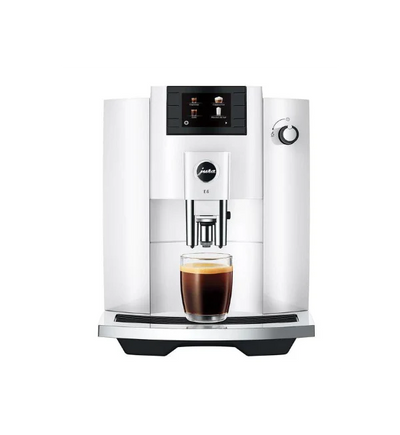
Best for one-touch convenience: Jura E6
If your household wants coffee at the push of a button, a machine like the Jura E6 represents the super-automatic case well. It’s for the buyer who wants consistency, speed, and less mess, not for the person who wants to fuss over every variable.
That distinction matters. A super-automatic can be the right answer if the machine has to serve multiple people with different drink habits, or if no one in the house wants a manual workflow before work. The compromise is that the espresso style is shaped by the machine’s internal system rather than your hands.
This category tends to work best for:
- Busy mornings: You need repeatability more than ritual.
- Shared kitchens: Several people want good coffee with minimal training.
- Low-friction ownership: The machine should reduce steps, not add them.
For the right buyer, that’s not settling. It’s choosing the right tool.
A quick visual walkthrough helps if you’re still deciding how much hands-on involvement you want.
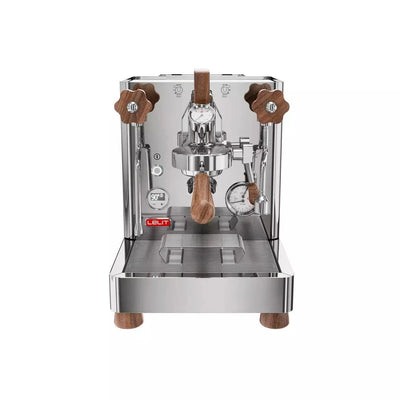
Best for serious home baristas: Lelit Bianca V3
If you want a machine you can grow into for years, the Lelit Bianca V3 is one of the most compelling prosumer choices available to Canadians. In Canadian home espresso benchmarks, it delivers equivalent flow control and pressure profiling to the La Marzocco GS3 paddle group at less than half the cost, around $4,315 CAD versus $10,000+ CAD, according to CoffeeGeek’s review of the best espresso machine options.
That matters because the Bianca isn’t just expensive for the sake of being expensive. It brings a real set of features that change what you can do in the cup. The same CoffeeGeek testing notes a 2.6L dual boiler system, split into 1.8L brew and 0.8L steam, PID temperature control to ±0.5°C accuracy, and an E61 grouphead setup designed for stable extractions, holding shots within 92 to 94°C for 25 to 30 seconds at a 1:2 ratio with 18g in and 36g out on light roasts, including coffees from roasters such as Pallet Coffee.
Its most important differentiator is the rotary pump and control over pre-infusion. CoffeeGeek notes that the Bianca’s 0 to 14 bar adjustable system enables true zero-pressure pre-infusion, which in their testing reduced channelling by 40% in blind taste tests versus fixed-pressure machines, while also producing 3 to 5mm crema thickness and body scores of 8.5/10 compared with 7/10 on the Breville Bambino Plus in that benchmark.
What that means in plain English:
- Light roasts improve: This machine gives you real tools to handle coffees that punish simpler machines.
- Milk drinks get easier: Dual boilers make back-to-back brewing and steaming far more comfortable.
- Noise matters less: Quieter operation is a genuine quality-of-life win in apartments.
- Value is unusually strong: It plays in a tier that often costs far more.
If you know you want flow control, pressure profiling, and room to chase better espresso for years, the Bianca V3 is where value and performance meet unusually well.
The trade-off is obvious. This isn’t the right first machine for everyone. It costs more, takes up more room, and only makes sense if you’re ready to support it with a capable grinder, fresh beans, and some patience.
Best first real espresso machine: Gaggia Classic Pro
The Classic Pro is built around commercial parts rather than appliance ones. Its portafilter, the handled basket the coffee goes into, is the 58 mm size cafes use, so baskets and tampers bought later will fit it. The E24 version replaced the older aluminium boiler with brass, which holds heat more steadily and gives more steam.
There is no PID, so no temperature reading to work from, and one boiler means brewing and steaming take turns. Neither is really a flaw at this price. They are the reason the price is what it is. Budget for a grinder before you budget for anything else.
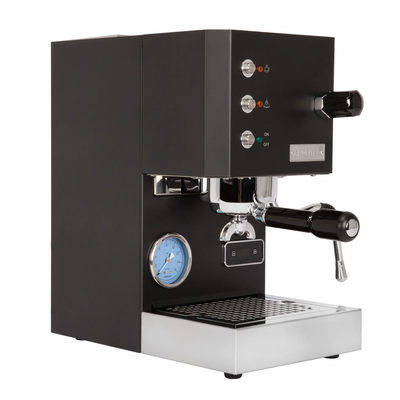
Best step up: Profitec GO
The GO is a single boiler machine with PID temperature control, which means you set the brew temperature to a number and the machine holds it there. The same display counts the shot time, and a valve on the outside of the case changes the brew pressure without opening anything up.
It heats quickly and can switch itself off on a timer. The 400 ml boiler suits one or two drinks at a time, and like any single boiler it makes you wait between pulling a shot and steaming milk.
Navigating the Canadian Espresso Machine Market
Canadian buyers run into a problem early. The review says a machine is “great value”, but the price on the screen doesn’t match what you can buy it for here.
Why Canadian prices look higher
Most online reviews for machines like the Gaggia Classic Pro or Breville Bambino Plus use US pricing and ignore a 15 to 25% price difference in Canada due to tariffs and exchange rates, which means Canadian buyers often misread the actual value gap between entry-level and mid-range machines.
That changes the buying decision more than people expect. A machine that looks like a clear bargain in a US article may land close enough to the next category up in Canada that it’s worth reconsidering. The reverse can also happen. A step-up machine can become hard to justify once Canadian retail pricing is added.
The practical lesson is simple. Don’t build your shortlist from US pricing alone.
What to check before you buy
A good Canadian purchase is about more than the sticker price. Check the whole ownership picture.
- Buy from Canadian retailers: Local stock matters when a machine arrives damaged, needs service, or requires parts.
- Look for CSA compliance: This matters for safety, peace of mind, and practical ownership.
- Read the warranty properly: A warranty is only useful if service exists where you live.
- Ask about parts access: Gaskets, baskets, group seals, and common wear items shouldn’t be hard to source.
A cheap cross-border deal isn’t a deal if service becomes your problem the moment something fails.
For Canadians, the best home espresso machine is often the one with the strongest local support, not the one with the flashiest sale price on an American site.
Beyond the Machine Your Complete Espresso Setup
A lot of disappointing home espresso setups have one thing in common. The buyer spent most of the budget on the machine and treated everything else like an accessory.
That’s backwards.
The grinder decides more than most buyers expect
If you’re buying a manual, semi-automatic, or prosumer machine, the grinder matters just as much as the machine itself. Sometimes more. Espresso lives or dies on grind consistency. A machine can only work with the puck you give it.
That’s why I’d rather see someone buy a modestly priced machine with a capable burr grinder than overspend on the machine and limp along with a weak grinder. The expensive machine won’t rescue bad prep.
If you need help sorting that side of the setup, this guide on how to grind coffee beans is worth reading before you buy anything.
A simple way to think about pairings:
| Machine Level | Grinder Priority | What matters most |
|---|---|---|
| Entry-level semi-automatic | Very high | Consistency and ease of adjustment |
| Mid-range traditional machine | Very high | Repeatable espresso grinding |
| Prosumer machine | Essential | Precision fine enough to exploit flow and pressure control |
| Super-automatic | Built in | Convenience over upgradeability |
Think in terms of ownership not checkout price
Current reviews often ignore long-term maintenance costs and repair accessibility in Canada. They rarely address which machines are easiest to service locally or whether parts are available from Canadian distributors, even though that matters a lot for people who hope to keep a machine for years.
That changes how I’d judge value. A simpler machine with better parts access can be a smarter purchase than a slicker machine that becomes difficult to repair. The same goes for sustainability. A machine you can keep running is usually the better long-term choice than one you replace when a small part fails.
Before buying, ask yourself these questions:
- Can I get parts in Canada: Don’t assume common replacement items will be easy to source.
- Is local service realistic: A warranty is less useful if shipping the machine is a hassle.
- Will I maintain it properly: Backflushing, cleaning, and water management affect lifespan.
- Am I buying for now or for years: Some machines are easy to outgrow. Others are worth maintaining.
The cheapest machine to buy is not always the cheapest machine to own.
Tamper, pitcher, scale, and cleaning supplies matter too. Not because they’re glamorous, but because they’re part of the workflow that makes good coffee repeatable.
Pairing Your Machine with Stillwater Coffee Club Beans
A machine doesn’t make flavour on its own. It reveals what the coffee already contains. That’s why the same bag of beans can taste flat in one setup and lively in another.
Match roast style to machine behaviour
Different machines flatter different coffees. A super-automatic usually does best with medium to darker roasts that are more forgiving and easier to extract well under fixed settings. A semi-automatic gives you more room to adjust for balance, especially if you like switching between classic espresso and milk drinks.
A prosumer machine with flow control and stronger temperature stability opens the door to lighter roasts that reward precision. That’s where floral notes, crisp acidity, and layered sweetness become easier to pull out cleanly.
If you want a classic espresso profile for milk drinks, a dedicated espresso roast like Warmth Espresso Blend makes sense. It gives you a more forgiving starting point while you learn your machine.
Use your machine to refine your bean choices
The best setup gets better over time because your preferences become clearer. Once you know how your machine behaves, you start to notice what you enjoy most. Maybe you want syrupy, chocolate-forward shots. Maybe you prefer brighter espresso that cuts through milk with more lift.
That’s where a subscription model becomes useful. Instead of buying random bags and hoping for the best, you can match coffees to your brew method and taste more intentionally. A capable machine helps you notice those differences. Better coffee helps the machine show what it can do.
Your Final Espresso Machine Buying Checklist
Before you buy, ask yourself a few blunt questions. They’ll save you from choosing the wrong machine for the wrong reasons.
- What is my real total budget: Include the grinder, tamper, milk pitcher, scale, and cleaning basics. Don’t judge the machine in isolation.
- How hands-on do I want to be: If you want button-press convenience, don’t buy a machine meant for tinkering. If you want craft and control, don’t buy a machine that hides the process.
- What do I drink most often: Straight espresso, cappuccinos, flat whites, and Americanos all put different demands on a machine.
- How much space do I have: Measure the counter, cupboard clearance, and room for a grinder.
- Will I buy from a proper Canadian retailer: Local support matters more than most first-time buyers think.
- Can I live with the workflow: Warm-up time, noise, refill routine, steaming, and cleaning all affect daily use.
- Am I buying a starter machine or a long-term platform: Either choice can be correct. Just be honest about which one you mean.
If you’re still unsure, narrow your decision this way. A semi-automatic is a sensible starting point. Busy households often do better with a super-automatic. Enthusiasts who know they want to go deep should look hard at prosumer machines.
The best home espresso machine is the one that fits your mornings, your taste, and your willingness to learn.
Giving espresso gear this Father's Day? See our Father's Day coffee gift guide for picks by dad type.
If you want beans that are worthy of a new espresso machine, Stillwater Coffee Club makes it easy to discover freshly roasted coffee from top Canadian roasters, matched to your taste and brew method so your setup delivers its full potential.
Frequently asked questions
What is the best home espresso machine for a beginner in Canada?
For most first serious buyers, a semi-automatic is the lane to start in. It gives you real control over grind, dose, tamp, and shot quality without the footprint or complexity of a prosumer setup. The Breville Bambino Plus is an easy one to understand here. It fits small kitchens, suits cappuccinos and flat whites, and gives enough control to learn without becoming fussy. The Gaggia Classic Pro is another compact option for buyers who want a more traditional machine feel, though it tends to ask a bit more from the user.
Is the Lelit Bianca V3 worth the price?
It depends on whether you want flow control, pressure profiling, and a machine you can grow into for years. The Bianca V3 runs around $4,315 CAD, and CoffeeGeek's testing puts it at equivalent flow control and pressure profiling to the La Marzocco GS3 paddle group, which costs $10,000+ CAD. It carries a 2.6L dual boiler split into 1.8L brew and 0.8L steam, PID control to plus or minus 0.5C, and an E61 grouphead. The trade-off is real: it costs more, takes up more room, and only makes sense if you back it with a capable grinder, fresh beans, and some patience.
Which espresso machine is best for milk drinks like cappuccinos and flat whites?
Steam performance matters more for milk drinks than the spec sheet suggests. The Breville Bambino Plus is approachable if cappuccinos and flat whites are your daily order, and it keeps your setup compact. If you want back-to-back brewing and steaming to feel comfortable, the Lelit Bianca V3's dual boilers make that far easier. For a one-touch route where several people want milk drinks with minimal training, a super-automatic like the Jura E6 handles the process internally.
Why do espresso machines cost more in Canada than in US reviews?
Most online reviews for machines like the Gaggia Classic Pro or Breville Bambino Plus use US pricing and skip a 15 to 25% price difference in Canada from tariffs and exchange rates. That gap changes the buying decision. A machine that looks like a clear bargain in a US article can land close enough to the next category up in Canada that it's worth reconsidering. Build your shortlist from Canadian pricing, not US numbers.
Should I spend more on the espresso machine or the grinder?
If you're buying a manual, semi-automatic, or prosumer machine, the grinder matters as much as the machine, sometimes more. Espresso lives or dies on grind consistency, and a machine can only work with the puck you give it. A modestly priced machine paired with a capable burr grinder beats overspending on the machine and limping along with a weak grinder. The expensive machine won't rescue bad prep. Factor the grinder, tamper, milk pitcher, scale, and cleaning basics into your real total budget.
Related guides
- La Specialista vs Barista Express
- Barista Express vs Bambino Plus
- Gaggia Classic Pro vs Profitec Go
- how to make espresso at home
- which Lelit espresso machine is right for you
- which Jura coffee machine is right for you
- which De'Longhi espresso machine is right for you
- which Rocket espresso machine is right for you
Compare every pick
| Model | Price | Type | Built-in grinder | Milk |
|---|---|---|---|---|
| Breville Bambino Plus Buy from AmazonBuy from Amazon | $649.99 $499.95 | Semi-automatic | No | Automatic or manual |
| Gaggia Classic Pro E24 | $749.00 $549.00 | Semi-automatic | No | Manual steam wand |
| Profitec GO | $1,679.00 — | Semi-automatic | No | Manual steam wand |
| Jura E6 | $2,095.00 $1,899.00 | Super-automatic | Yes | Automatic frother |
| Lelit Bianca | $4,595.00 $2,999.95 | Semi-automatic | No | Manual steam wand |
The picks in full
Best compact semi-automatic
Breville Bambino Plus
What's good
- Automatic milk, three temperatures and three foam levels
- Ready to brew about three seconds from cold
- Steam wand also runs in manual mode
What to know
- No built-in grinder, so budget for one
- Three foam levels, where the touchscreen models offer eight
Where to buy
Buy from AmazonWhere to buy
Buy from Amazon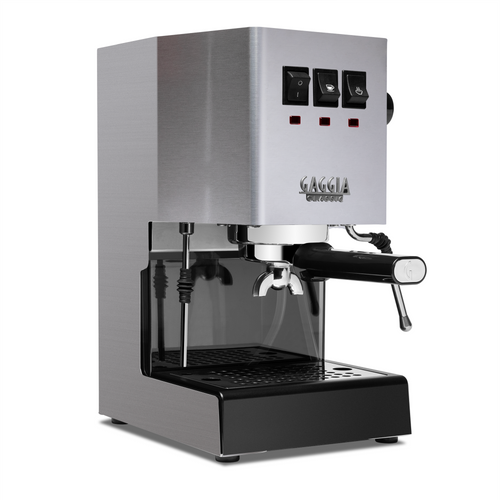
Best first real espresso machine
Gaggia Classic Pro E24
What's good
- 58 mm portafilter, the size cafes use
- Brass boiler holds temperature better than aluminium
- Three-way valve leaves a dry puck
What to know
- No PID, so temperature is not displayed
- One boiler, so brewing and steaming take turns
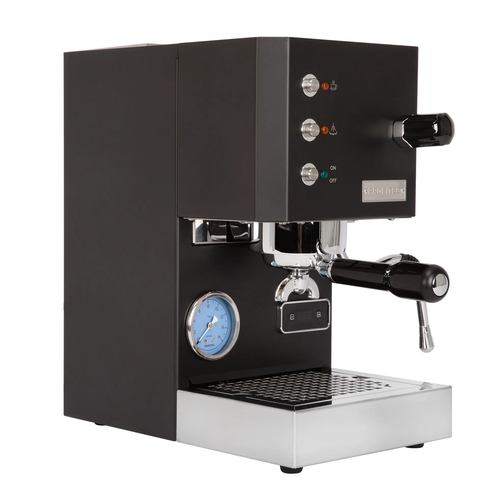
Best step up
Profitec GO
What's good
- Set the brew temperature to a number
- Display doubles as a shot timer
- Brew pressure adjusts from outside the case
What to know
- One boiler, so brewing and steaming take turns
- 400 ml boiler suits one or two drinks at a time
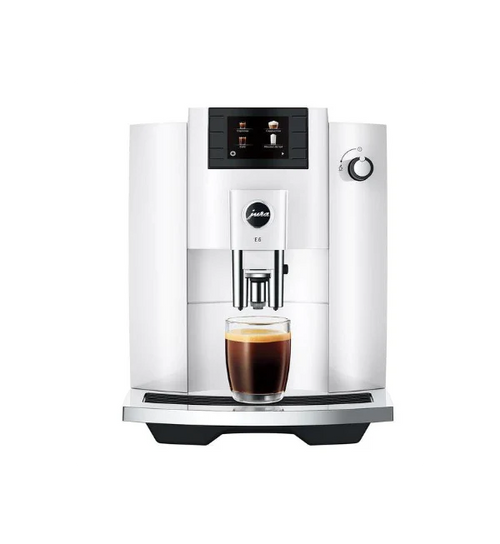
Best one-touch
Jura E6
What's good
- Eight strength settings, from mild to dense
- Pulsed extraction for short espresso
- Detects its own water filter automatically
What to know
- One bean hopper, so one coffee at a time
- Milk drinks need the separate frother
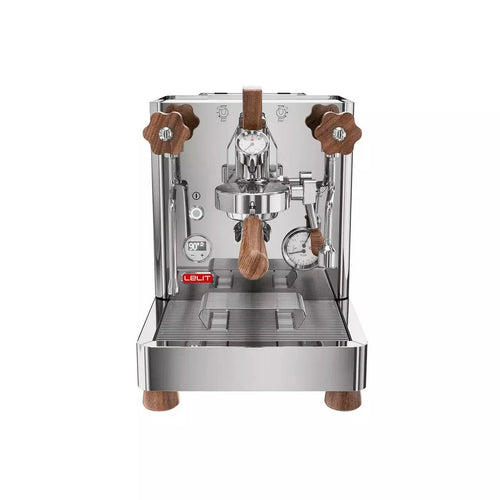
Best to grow into
Lelit Bianca
What's good
- Paddle controls water flow during the shot
- Two boilers, so steam is always ready
- Programmable pre-infusion at steady pressure
What to know
- Flow control rewards practice before it helps
- E61 group needs about 20 minutes to heat